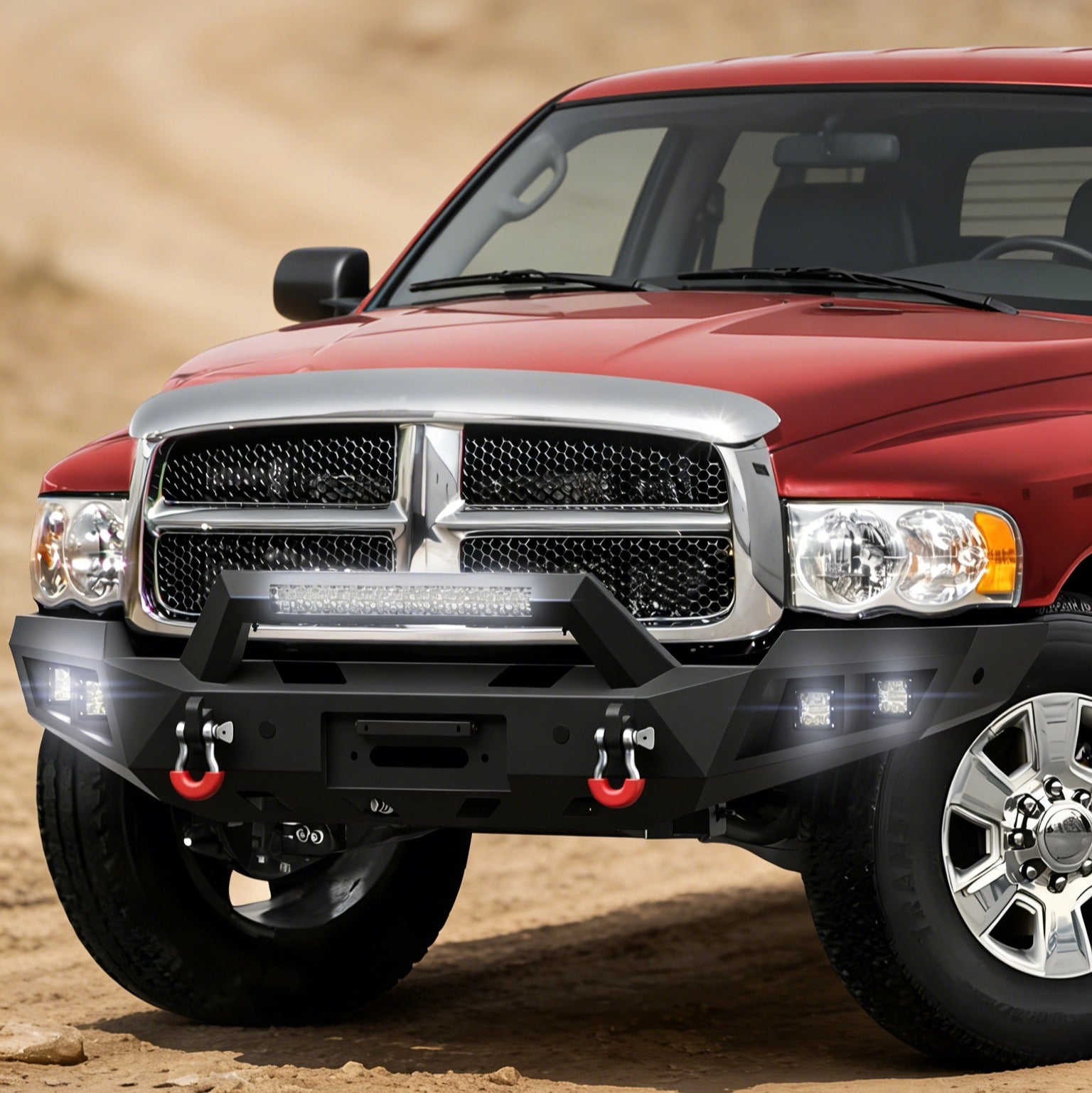
Will an Aftermarket Bumper Fit My Truck? A POFENZE Fitment Checklist
Last Updated: August 2026 | By POFENZE
Based on current POFENZE vehicle-specific bumper specifications, fitment guidance, and customer installation feedback.
If you're asking, "Will an aftermarket bumper fit my truck?", checking the year, make, and model is only the first step.
A properly selected aftermarket truck bumper should match your truck's vehicle generation, trim, factory mounting points, sensors, driver-assistance equipment, and any accessories that occupy space around the bumper.
This matters because two trucks listed under the same model year can still require different bumpers. A Ram 1500 Classic and a newer-generation Ram 1500 are a good example. Special trims such as Raptor or Rebel can also have different fitment requirements, while parking sensors, radar equipment, winches, skid plates, and towing components may affect installation even when the bumper itself matches the truck.
At POFENZE, our current fitment guidance recommends confirming more than just the basic vehicle name before ordering. Here is the checklist we recommend using.
Quick Answer: How Do I Know If an Aftermarket Bumper Will Fit?
Before ordering an aftermarket bumper, verify these eight areas:
| # | Check | What to Confirm | Why It Matters |
|---|---|---|---|
| 1 | Year | Exact model year | Body and mounting designs change between years |
| 2 | Make & Model | Exact truck model | Similar-looking trucks may use different frames or brackets |
| 3 | Generation | 2nd Gen, 3rd Gen, Classic, new body, etc. | Generations can overlap in model years |
| 4 | Trim | Raptor, Rebel, ZR2, TRD, Denali, etc. | Special trims may use different factory equipment |
| 5 | Cab / Bed Configuration | Cab size and bed length when relevant | Some accessories and mounting arrangements vary |
| 6 | Sensors & Electronics | Parking sensors, cameras, radar, BSM, ACC | Electronic compatibility is separate from physical fit |
| 7 | Factory Equipment | Tow hooks, skid plates, hitch, exhaust, wiring | Factory components can occupy installation space |
| 8 | Accessories | Winch, lights, brackets, recovery equipment | Bumper fit does not automatically guarantee accessory fit |
The POFENZE Fitment Rule:
Vehicle → Generation → Trim → Factory Equipment → Bumper → Accessories
Following that order is safer than choosing a bumper by appearance first and trying to make it work afterward.

Why Year, Make and Model Are Not Always Enough
Most people begin with a search such as "2017 Ford F150 front bumper" or "2020 Ram 1500 rear bumper." That's a useful way to narrow the search, but it should not be your final compatibility check.
During a truck's production cycle, manufacturers may change: frame and bumper mounting points, factory brackets, grilles and lower valances, tow hooks, skid plates, parking sensor positions, radar or camera systems, exhaust clearance, hitch and trailer wiring, body styling, and special trim equipment.
Sometimes these changes happen with a new vehicle generation. Other times they occur only on a particular trim or factory package. That's why a bumper that looks correct in photos may still be wrong for your truck.
A good fitment decision matches the bumper to the truck's platform and equipment — not simply the badge on the tailgate.
Real POFENZE Fitment Examples
The easiest way to understand this is to look at actual fitment differences found across current POFENZE bumper applications.
1. Toyota Tacoma: Generation Matters
POFENZE currently offers a vehicle-specific front bumper application for the 2005–2015 Toyota Tacoma 2nd Gen. That "2nd Gen" designation is important. A Toyota Tacoma remained the Tacoma across multiple generations, but the vehicle underneath changed. Mounting locations, body lines, factory equipment, and available space around the front bumper can change when a truck moves from one generation to another.
So when shopping for a Toyota Tacoma aftermarket bumper, don't check only: Toyota Tacoma ✓
Check: Toyota Tacoma → Model Year → Generation ✓
For the POFENZE 2005–2015 Tacoma 2nd Gen front bumper, the current specifications also list a winch plate rated for up to 12,000 lbs, built-in lighting, pre-drilled sensor holes, and installation using the supplied mounting hardware without drilling. Those features are specific to that bumper application and should not automatically be assumed for every Tacoma bumper.
👉 Browse the POFENZE Toyota Tacoma Bumper
2. Ram 1500: Classic vs. New Body Is Critical
Ram 1500 fitment is one of the clearest examples of why model year alone can be misleading. POFENZE currently has bumper applications that distinguish between 2013–2018 Ram 1500 and selected later Ram 1500 Classic models, and 2019–2025 Ram 1500 models that exclude the Classic.
That means a customer searching "2020 Ram 1500 bumper" still has another question to answer: Is it a Ram 1500 Classic or the newer-generation Ram 1500?
Some POFENZE Ram 1500 front bumper applications also specifically exclude the Rebel trim.
POFENZE Fitment Lesson: For a Ram 1500, confirm: Year → Classic or New Body → Trim → Sensors / Equipment before choosing the bumper.
👉 Discover the Ram 1500 Bumper

3. Ford F-150: Read the Exclusions
POFENZE currently lists a front bumper application for 2015–2017 Ford F-150 with an important qualification: Excluding Raptor & EcoBoost. The bumper includes features such as a winch plate, LED lighting, D-rings, sensor holes, and mounting hardware, but the official fitment specification still excludes those configurations.
A POFENZE customer has reported successfully using this bumper on an EcoBoost F-150 when the winch plate was not used. However, that does not change the official product fitment. If a POFENZE product page lists your truck or trim as excluded, we recommend treating that exclusion as part of the fitment specification rather than assuming another owner's custom solution will apply to your vehicle.
👉 See the POFENZE Ford F150 Bumper

Does Trim Level Affect Aftermarket Bumper Fitment?
It can. POFENZE's current fitment guidance specifically recommends additional verification for special trims because factory bumpers, mounting points, sensors, skid plates, suspension components, and body accessories may differ.
| Vehicle Family | Configuration Worth Checking |
|---|---|
| Ford F-Series | Raptor and other special configurations |
| Ram 1500 | Rebel; Classic vs. new body |
| Chevrolet Colorado | ZR2 |
| Toyota Tacoma | TRD and generation-specific equipment |
| GMC Sierra | Denali and factory equipment differences |
| Chevrolet Silverado | High Country / Trail Boss configurations |
| Nissan Trucks | Pro-4X configurations |
| Jeep | Rubicon and factory off-road equipment |
This does not mean every bumper is incompatible with every special trim. It means the product page should make the compatibility decision — not an assumption based on exterior appearance. If your exact trim is not clearly covered, confirm before ordering.
Parking Sensor Holes Are Not the Same as Parking Sensors
Some POFENZE bumpers include pre-drilled parking sensor holes. Others do not. For example, one current POFENZE Ram 1500 front bumper application for 2013–2018 Ram 1500 and later Classic models includes pre-drilled parking sensor holes but does not include the sensors themselves. Another POFENZE Ram 1500 front bumper with a winch plate specifically states that it has no parking sensor holes.
So before ordering, ask: Does my truck have factory parking sensors? Then: Does this exact bumper provide the correct sensor provisions?
Do not assume that every version of a bumper for the same truck has the same sensor configuration.

What About Adaptive Cruise Control, Blind-Spot Monitoring and Cameras?
Physical bumper fitment and electronic compatibility are two different questions. Depending on your truck, factory equipment may include: parking sensors, front or rear cameras, adaptive cruise control radar, blind-spot monitoring, collision-warning equipment, lane-assistance hardware, and trailer-related electronics.
POFENZE's current fitment guidance notes that compatibility with these systems can vary according to the model, trim, and factory equipment. A bumper mounting successfully to the frame does not automatically guarantee that every factory driver-assistance feature will operate without additional work.
Before removing your original bumper, identify the sensors, cameras, modules, brackets, and wiring mounted in or around it. If your vehicle uses safety-related radar, camera, or driver-assistance equipment and the installation requires relocation or recalibration, professional automotive assistance may be appropriate.
Winch Fitment Is a Separate Check
Many POFENZE front bumpers include an integrated winch plate. Several current applications are designed around winches rated up to approximately 12,000 lbs. But this leads to an important rule:
Bumper Fitment ≠ Winch Fitment
First determine: Does the bumper fit the truck? Then determine: Does the exact winch fit the available space? Winches with similar ratings can have different housing dimensions, clutch lever positions, control-box locations, fairlead configurations, and cable or rope setups.
One Ram 1500 customer reported installing a 12,000-lb winch and achieving good overall bumper fitment, but some local clearance work around the winch installation was required. The bumper can match the truck while the chosen accessory introduces its own clearance requirements. Measure the winch and review its installation requirements before assuming that capacity alone determines compatibility.
What Real POFENZE Customer Installations Tell Us About Fitment
Product specifications tell you what a bumper was designed to fit. Customer installations help show what happens once parts meet real trucks.
One Toyota Tundra owner reported that the bumper aligned without trimming or washer shimming and completed the installation in a few hours. Another Ram 1500 owner described the overall bumper fitment as close while needing some additional adjustment around the winch installation. Another customer reported minor trimming to achieve the fit and alignment they wanted.
These experiences point to an important distinction: Vehicle-Specific Does Not Mean Every Used Truck Is Identical. Two trucks that left the factory with the same specifications can be different years later because of previous collision repairs, bent factory brackets, replacement body panels, suspension changes, body lifts, aftermarket skid plates, previous bumper modifications, tow equipment, accessory wiring, and manufacturing tolerances.
That is why the correct goal during installation is not simply "Do the bolts go in?" — it is: "Does this bumper match the listed vehicle application, clear the truck's equipment, and align correctly before final tightening?"
What Does "Bolt-On" Actually Mean?
A common misunderstanding is: Bolt-on = universal fit. It doesn't. A vehicle-specific bolt-on bumper is designed to use the mounting system of a particular vehicle application.
Think of it this way:
- Vehicle-specific fit = which truck it fits
- Bolt-on installation = how it attaches
Those are different characteristics. A direct-bolt Silverado bumper doesn't become compatible with a Sierra, Ram, Tacoma, or another Silverado generation simply because both installations use bolts.

Will I Need to Drill or Modify My Truck?
It depends on the exact bumper. Many current POFENZE vehicle-specific bumper listings state that the supplied mounting hardware uses existing mounting locations without drilling or major vehicle modification. For example:
- The POFENZE 2005–2015 Tacoma 2nd Gen front bumper is listed for installation without drilling or modification.
- The current 2015–2017 F-150 application is also described as requiring no drilling or modification within its specified fitment.
- A current 2014–2015 Silverado 1500 front bumper uses a direct-bolt mounting design.
- Selected Ram 1500 bumpers are described as three-piece designs intended for straightforward assembly and installation.
However, this should never be generalized to every aftermarket bumper or every modified truck. Always use the instructions for the exact part you're installing.
A Five-Minute Check Before Removing Your Factory Bumper
Once you receive the bumper, do one more compatibility review before disassembling the truck.
1. Confirm the part and vehicle again
Check: Year → Make → Model → Generation → Trim
2. Inspect your truck
Look behind and around the factory bumper for: parking sensors, cameras, radar modules, tow hooks, skid plates, trailer wiring, hitch components, and aftermarket accessories.
3. Compare the hardware
Review the mounting brackets and installation instructions before removing anything.
4. Check planned accessories
If you're adding a winch, auxiliary lights, or other equipment, check their dimensions and mounting requirements separately.
5. Look for previous modifications
Pay particular attention to signs of accident repair, bent brackets, previously drilled holes, aftermarket bumper mounts, and suspension or body modifications. Finding a conflict now is much easier than finding it after the factory bumper is already on the garage floor.
POFENZE Fitment Matrix: What Different Applications Teach Us
| POFENZE Application | Important Fitment Detail | Additional Check |
|---|---|---|
| 2005–2015 Toyota Tacoma Front Bumper | 2nd Gen vehicle-specific fit | Sensors and winch clearance |
| 2013–2018 Ram 1500 / Later Classic Front Bumper | Classic body distinction; selected versions exclude Rebel | Sensor holes vary by bumper |
| 2019–2025 Ram 1500 Rear Bumper | Excludes Classic | Factory sensors/equipment |
| 2015–2017 Ford F-150 Front Bumper | Officially excludes Raptor & EcoBoost | Winch and factory-equipment clearance |
| 2014–2015 Silverado 1500 Front Bumper | Vehicle-specific direct-bolt design | Winch and lighting wiring |
| 2007–2013 Silverado 1500 Front Bumper | Vehicle-specific fit with pre-drilled sensor holes | Confirm factory sensor configuration |
The important takeaway is not that every truck is complicated. It is that each product has its own compatibility specification.
What Information Should I Send POFENZE If I'm Not Sure?
If you're still unsure about compatibility, don't send only "Will this fit my Ram?" The more useful information is:
- Year, Make, Model, Trim
- Cab configuration and bed length (when relevant)
- Classic / new-body designation (when relevant)
- Factory parking sensors, cameras, driver-assistance systems
- Special factory equipment and existing modifications
POFENZE's current product guidance recommends providing this information when requesting fitment assistance. You can contact service@pofenze.com before ordering if your truck's configuration is unclear.
Frequently Asked Questions
Will any aftermarket bumper fit my truck if the width looks correct?
No. Exterior width is not enough to determine fitment. Mounting locations, vehicle generation, frame design, trim, sensors, and factory equipment all matter.
How do I know which aftermarket bumper fits my truck?
Start with the exact year, make, and model, then confirm the generation, trim, cab or bed configuration if relevant, factory sensors, driver-assistance equipment, and any fitment exclusions listed on the product page.
Does truck generation really matter?
Yes. A 2005–2015 Toyota Tacoma 2nd Gen bumper, for example, should not automatically be assumed to fit a later Tacoma generation even though both vehicles are Toyota Tacomas.
What's the difference between Ram 1500 and Ram 1500 Classic bumper fitment?
They represent different body configurations during overlapping model years. POFENZE currently carries separate applications for newer Ram 1500 models and Ram 1500 Classic trucks, so checking "Classic" is essential before ordering.
Will an aftermarket bumper fit a Ford F-150 Raptor?
It depends on the specific product. POFENZE's current 2015–2017 F-150 front bumper application specifically excludes Raptor and EcoBoost models. Always follow the product's stated fitment rather than assuming that all F-150 bumpers are interchangeable.
Can I reuse my factory parking sensors?
Possibly. Some POFENZE bumpers include pre-drilled sensor holes while others do not. Sensor holes also do not mean sensors are included. Check the exact bumper specification before purchasing.
Will adaptive cruise control still work after installing a steel bumper?
That depends on the vehicle, location of the radar or cameras, and the bumper design. Physical mounting compatibility does not automatically guarantee compatibility with all factory driver-assistance systems.
Does a 12,000-lb winch rating mean every 12,000-lb winch will fit?
No. Winch capacity and physical dimensions are separate. Check housing dimensions, clutch lever position, control-box location, and available clearance before installation.
Do POFENZE bumpers require drilling?
Many current POFENZE vehicle-specific bumper applications are designed to use factory mounting locations without drilling, but requirements vary by product. Follow the instructions for the exact bumper you're purchasing.
Can I install a steel bumper myself?
Many vehicle-specific bolt-on bumpers can be installed by experienced DIY owners using standard automotive tools, but steel bumpers are heavy and alignment can be difficult alone. Using a helper is recommended, and professional installation may be preferable when factory safety electronics or extensive accessories are involved.
Final Answer: Will an Aftermarket Bumper Fit My Truck?
Yes — if the bumper is designed for your specific vehicle configuration and all relevant factory equipment has been checked.
Don't stop at: Year + Make + Model
Use the complete POFENZE fitment process: Vehicle → Generation → Trim → Factory Equipment → Bumper → Accessories
A Ram 1500 Classic may require a different bumper than a newer-generation Ram 1500 from the same year. A special trim may have different factory components. Parking sensor holes can vary between bumper versions. And even when the bumper fits correctly, a winch or another accessory can introduce separate clearance requirements.
Taking five minutes to confirm those details before ordering can prevent hours of troubleshooting during installation.
POFENZE offers vehicle-specific front bumpers, rear bumpers, and bumper sets for popular truck applications including Toyota Tacoma and Tundra, Ford F-Series trucks, Ram trucks, Chevrolet Silverado, GMC Sierra, Jeep, and Nissan models.
👉 Find the Right POFENZE Bumper
Before choosing a bumper, start with your vehicle — not the bumper style. And if your truck has a special trim, factory sensors, cameras, driver-assistance equipment, or an unusual configuration, send POFENZE your year, make, model, trim, cab configuration, bed length where relevant, and factory equipment information before ordering.
The right aftermarket bumper upgrade starts with getting the fitment right.